
Products
VOLUMETRIC CUP FILLER
Category: Auxiliary equipment
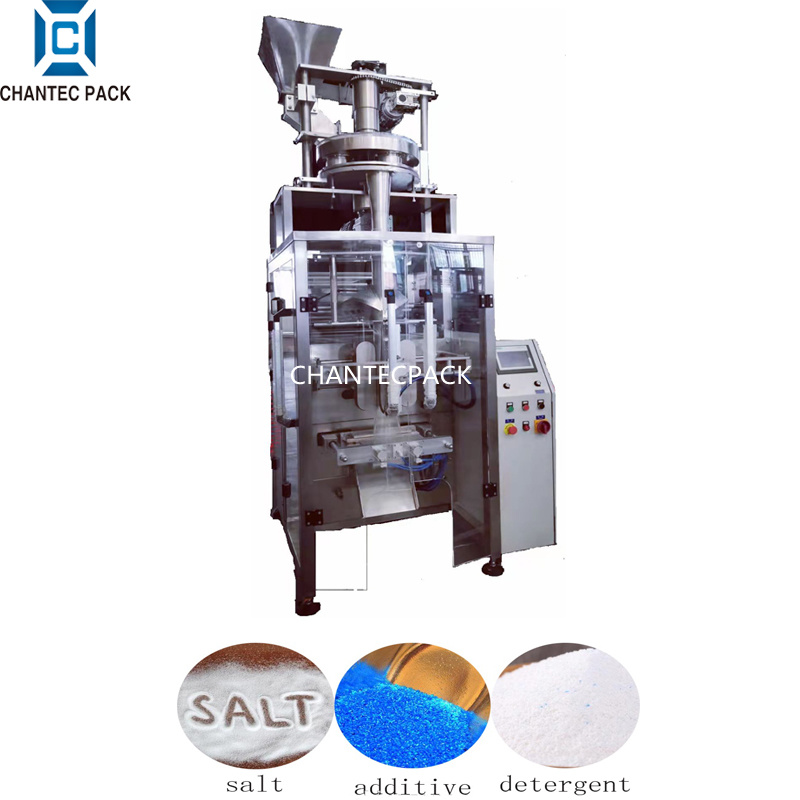
(1)The system is made with sets of measuring cups .It will be designed and install with vertical packing according to customer’s requirement.<br/> (2)It will be made with 304 stainless steel(accept customised 316steel) , which will be suitable for food grade.<br/> (3)It is suitable for measuring granule like rice,bean,sugar,salt. etc.<br/> (4)Adjustable range : 20%<br/> (5)Change the cups for different kinds or different weight of product
Product Detail
(1).The system is made with sets of measuring cups .It will be designed and install with vertical packing according to customer's requirement.
(2).It will be made with 304 stainless steel(accept customised 316steel) , which will be suitable for food grade.
(3).It is suitable for measuring granule like rice,bean,sugar,salt. etc.
(4).Adjustable range : 20%
(5).Change the cups for different kinds or different weight of product
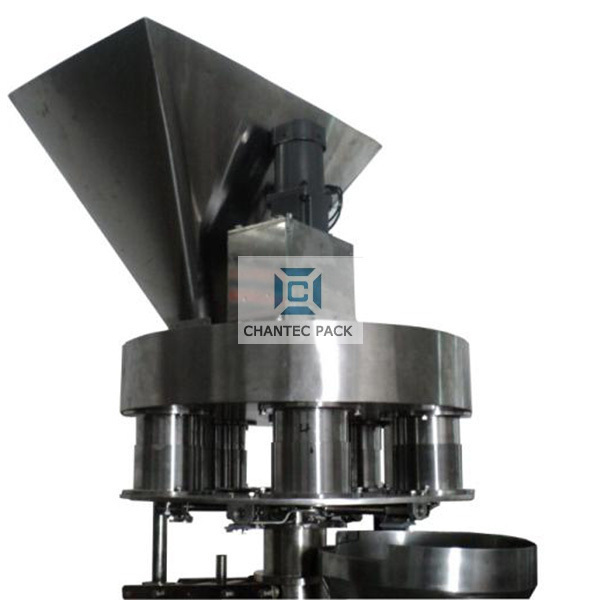
A Volumetric Cup Filler is a cost-effective, high-speed volumetric metering device designed to dispense consistent volumes of free-flowing granular or pelletized materials into containers, bags, or packaging systems. It operates on the principle of fixed-volume measurement using a set of precision-engineered cups, making it ideal for industries prioritizing throughput over ultra-high accuracy—such as food processing, agriculture, and household chemicals. Widely integrated into vertical form-fill-seal (VFFS) machines, pillow bag packers, and other automated packaging lines, this filler is a staple for mass-production scenarios.
Core Working Principle
The operation of a volumetric cup filler is a continuous, cyclic process optimized for free-flowing materials, with four key stages:
- Material Hopper Loading & FeedingBulk material (e.g., rice, beans, sugar crystals, detergent pellets, snack nuts) is loaded into a large hopper that acts as a reservoir. A vibrating feeder or auger at the hopper base ensures a steady, uniform supply of material to the rotating cup carousel below, preventing gaps or uneven filling of the cups.
- Cup Filling & Excess Material ScrapingThe core component is a rotating carousel fitted with multiple identical cups (the number of cups varies by model, typically 4–12). As the carousel spins through the hopper’s material flow, each cup is filled to capacity. A stationary, precision-machined scraper blade then trims off any excess material protruding above the cup’s rim—this step ensures every cup holds an identical, preset volume of material, eliminating variations between batches.
- Material DischargeAs the carousel rotates to the discharge position (aligned with the packaging machine’s filling chute or container inlet), gravity causes the material to empty from the cup into the waiting package. Some models feature a mechanical ejector or brush to dislodge any sticky particles that cling to the cup walls, ensuring complete discharge and maintaining fill consistency.
- Cycle Repeat & CalibrationThe carousel continues rotating, repeating the fill-scrape-discharge cycle. To adjust the fill volume for different products or package sizes, operators simply replace the existing cup set with a new set of cups with larger or smaller capacities—no complex software reconfiguration or mechanical overhauls are required. For enhanced accuracy, the filler can be paired with a checkweigher to fine-tune the material feed rate and correct minor deviations.
Key Components
- Hopper: A large-capacity reservoir (usually made of 304 stainless steel) to store bulk material; equipped with a level sensor to alert operators when material levels are low.
- Cup Carousel: A rotating disk fitted with interchangeable cups; driven by a variable-speed motor to adjust throughput based on production needs.
- Scraper Blade: A hardened steel or food-grade plastic blade positioned above the carousel to trim excess material; adjustable in height to match cup depth.
- Discharge Chute: A smooth, sloped channel that guides material from the cups to the packaging system; designed to minimize material bounce and spillage.
- Control Panel: A simple interface (often with a PLC or touchscreen) to adjust carousel speed, monitor material levels, and set basic operational parameters.
Key Features & Advantages
- High Throughput for Mass ProductionThe rotary design enables continuous, uninterrupted operation, with throughput ranging from 30 to 150 fills per minute (depending on cup size and carousel speed). This makes it significantly faster than auger fillers for free-flowing materials, ideal for high-volume packaging lines.
- Low Cost & Simple MaintenanceCompared to multi-head weighers or auger fillers, volumetric cup fillers have a simpler mechanical structure, lower initial investment, and minimal maintenance requirements. The interchangeable cup sets are affordable and easy to replace, reducing downtime during product changeovers.
- Ideal for Free-Flowing MaterialsIt excels at metering dry, non-sticky, free-flowing granular or pelletized materials (e.g., seeds, fertilizer pellets, candy, pet food kibble). Materials with good flowability ensure consistent cup filling and discharge, with typical fill accuracy ranging from ±1% to ±3%.
- Hygienic & Food-Grade DesignAll parts in contact with material are constructed from 304 or 316 stainless steel, compliant with FDA and EU food safety standards. The open design of the carousel and hopper allows for easy cleaning and sanitization, preventing cross-contamination between different products.
- Easy Operation & Quick ChangeoversNo specialized training is required for operators to adjust the machine or swap cup sets. Changing between product sizes can be completed in 5–10 minutes, making the filler perfect for facilities that produce multiple product variants.
Typical Application Scenarios
Volumetric cup fillers are widely used across industries that package free-flowing granular products:
- Food Industry: Filling rice, beans, sugar, popcorn, snack nuts, and instant noodle seasoning granules into pillow bags or pouches.
- Agriculture: Metering seeds, fertilizer pellets, and animal feed into large bags or sacks.
- Household Chemicals: Packaging detergent powder, fabric softener beads, and desiccant granules into small sachets or large containers.
- Consumer Goods: Dispensing plastic pellets, small hardware parts, and toy beads into retail packaging
Keywords:
Download attachmen:
Relative Products

Follow us on social media


Copyright: Hefei IECO Intelligent Equipment CO.,LTD
 sales@chantecpack.com
 Message

Contact with us
 Hotline: +86-0551-68899421
 Phone: +86 13731992050
 Email: sales@chantecpack.com
 whatsapp/wechat: +86 13731992050
 FACTORY ADD:2# workshop, no.200 chaoyang road,gangji town,changfeng county ,hefei,china
OFFICE:3# workshop 1st floor Changning Ave.High-tech district,Hefei,China
