
Products
Product Detail
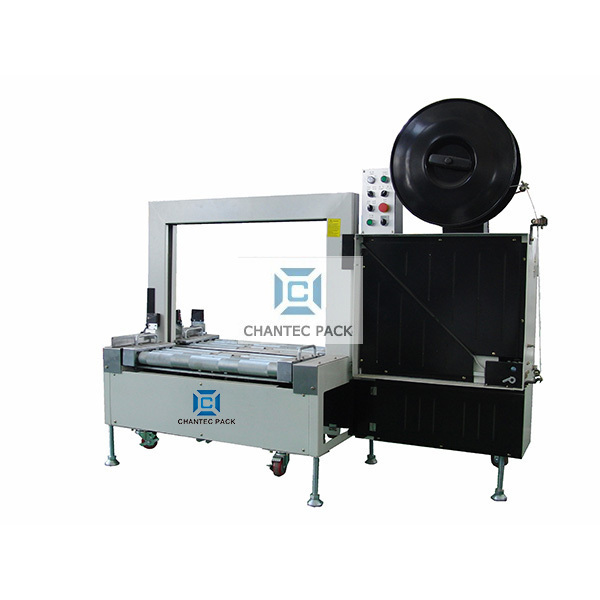
Technical Parameters
Power supply: 0.85KW 380V, 50HZ
Strapping speed: 2.0/Sec
Strap Tied tight :5-80Kgs
Applicable to the PP belt: width 9-16mm, thickness :0.5-1 .0 mm
Bow frame size: bow frame: the W850 × H600mm (according to request)
Machine Size: W1880 × D600 × H1200mm console height: 480mm (according to request)
Machine Weight: 280Kg
A Strapping Machine is a specialized piece of packaging equipment designed to secure packages, bundles, or pallets using a strap (typically made of plastic, steel, or woven fabric). Its core function is to apply tension to the strap, wrap it tightly around the target load, and seal the strap ends together—creating a stable, secure bundle that resists shifting, damage, or tampering during storage and transportation. Widely used in warehouses, distribution centers, manufacturing plants, and logistics hubs, strapping machines streamline packaging workflows and ensure load integrity across industries.
Core Working Principle & Operational Workflow
The basic operation of a strapping machine follows four consistent steps, with variations based on automation level and strap material:
- Strap Feeding & PositioningThe machine feeds a continuous roll of strapping material (e.g., polypropylene (PP) plastic strap, polyester (PET) plastic strap, steel strap) through a guide system. For pallet or large bundle strapping, the guide system forms a loop around the load; for small packages, the strap is routed directly around the item via fixed or adjustable guides.
- TensioningA motor-driven tensioning mechanism pulls the strap tight around the load, applying controlled pressure to compress the bundle slightly (critical for stabilizing loose items like cardboard boxes or printed materials). The tension level is adjustable—lower tension for fragile goods (e.g., electronics, glass) and higher tension for heavy, rigid loads (e.g., metal parts, construction materials).
- SealingThis step joins the two overlapping ends of the strap to form a permanent bond, with three common sealing methods depending on strap type:
- Heat sealing (for plastic straps): A heating element melts the strap ends, and a pressure bar fuses them together. This is the most common method for PP/PET straps used in light to medium-duty applications.
- Friction welding (for high-strength PET straps): The machine rubs the strap ends against each other at high speed to generate heat, creating a strong, uniform weld suitable for heavy loads and pallet strapping.
- Mechanical sealing (for steel straps or heavy plastic straps): A metal seal (clip) is placed over the overlapping strap ends, and a crimper presses the seal to clamp the strap together. This method is ideal for rugged industrial applications where heat sealing is impractical.
- Cutting & EjectionAfter sealing, a blade cuts the strap from the continuous roll, completing the strapping cycle. The finished, strapped load is then ejected or conveyed to the next workflow stage (e.g., palletizing, shipping).
Main Types by Automation Level
Strapping machines are categorized based on the degree of manual intervention required, making them adaptable to different production volumes:
- Semi-Automatic Strapping MachineOperators manually position the package under the strap guide, activate the machine via a button or foot pedal, and remove the strapped package after the cycle ends. Ideal for small to medium-sized businesses with low to moderate production volumes (e.g., local retailers, small warehouses). It has a compact footprint and simple operation, requiring minimal training.
- Automatic Strapping MachineFully integrated with conveyor systems, this model automatically feeds, positions, straps, and discharges packages without manual intervention. It is designed for high-volume production lines (e.g., e-commerce fulfillment centers, food processing plants) and can handle a wide range of package sizes with adjustable guide rails and tension settings.
- Automatic Pallet Strapping MachineA heavy-duty variant engineered for securing entire pallets of goods. It features vertical and horizontal strap guides to apply straps around the pallet’s perimeter (top to bottom) and across the load (side to side), ensuring maximum stability for heavy palletized shipments. Some models support dual-strap configurations for extra reinforcement.
Key Features & Advantages
- Load Stability & Damage PreventionTight strapping prevents packages from shifting during transit, reducing the risk of tears, dents, or product loss. For palletized loads, it eliminates the need for excessive stretch wrapping and ensures compliance with shipping and logistics standards.
- Labor Savings & EfficiencyAutomatic and semi-automatic models reduce repetitive manual labor (e.g., hand-strapping with tools) and cut packaging time by 50–80% compared to manual methods. High-speed automatic machines can strap up to 30 packages per minute, matching the pace of high-volume production lines.
- Versatility in Strap & Load CompatibilityThe machine works with various strap materials (PP, PET, steel, woven fabric) and widths, accommodating loads ranging from small cardboard boxes (e.g., postal parcels) to large pallets (e.g., construction materials). Tension and sealing parameters are easily adjustable for different load types.
- Durable & Low-Maintenance DesignBuilt with heavy-duty steel frames and wear-resistant components, strapping machines are engineered for continuous 24/7 operation in industrial environments. Most models feature quick-change strap rolls and easy-to-access tensioning/sealing parts, minimizing maintenance downtime.
- Cost-Effective Packaging SolutionPlastic straps (PP/PET) are affordable and recyclable, while the machine’s high efficiency reduces labor costs and material waste (consistent tensioning avoids over-strapping). For long-term use, the total cost of ownership is significantly lower than manual strapping methods.
Typical Application Scenarios
Strapping machines are essential across diverse industries for securing different types of loads:
- Logistics & E-Commerce: Strapping cardboard boxes, parcel bundles, and palletized shipments for safe delivery.
- Manufacturing: Securing bundles of metal parts, pipes, lumber, and automotive components during internal transport and shipping.
- Food & Beverage: Strapping cases of canned goods, bottled beverages, and packaged food pallets to maintain load integrity in cold storage and transit.
- Printing & Publishing: Bundling stacks of paper, books, and magazines to prevent shifting during delivery to retailers.
Keywords:
Download attachmen:
Relative Products

Follow us on social media


Copyright: Hefei IECO Intelligent Equipment CO.,LTD
 sales@chantecpack.com
 Message

Contact with us
 Hotline: +86-0551-68899421
 Phone: +86 13731992050
 Email: sales@chantecpack.com
 whatsapp/wechat: +86 13731992050
 FACTORY ADD:2# workshop, no.200 chaoyang road,gangji town,changfeng county ,hefei,china
OFFICE:3# workshop 1st floor Changning Ave.High-tech district,Hefei,China
