
Products
Product Detail
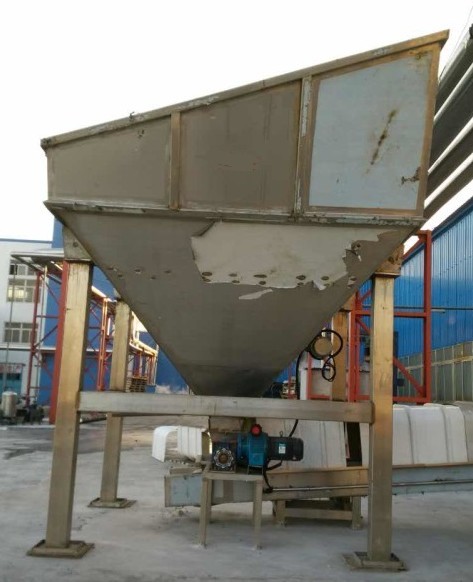
A Raw Material Silo of the Salt is a large-scale, enclosed storage structure designed to hold bulk quantities of unprocessed raw salt (e.g., mined rock salt, harvested sea salt, solar-evaporated salt crystals) before it enters downstream processing stages (crushing, washing, iodization, packaging). Engineered for durability, hygiene, and material preservation, these silos are a critical component of salt processing plants, ensuring a continuous, stable supply of raw material to the production line while protecting salt from environmental contamination and moisture damage.
Core Structure & Design Features
Salt raw material silos are tailored to the physical properties of salt (abrasive, hygroscopic, free-flowing) and storage volume requirements, with key structural elements including:
- Silo BodyThe main storage vessel, typically constructed from 304/316 stainless steel (for food-grade salt applications) or carbon steel with corrosion-resistant coating (for industrial salt). Silos are cylindrical or conical-bottomed, with capacities ranging from 50 cubic meters (small batch plants) to over 1,000 cubic meters (large-scale industrial facilities). The conical bottom (slope angle of 60°–70°) is critical for ensuring smooth, gravity-driven material discharge and preventing salt from bridging or caking at the base.
- Roof & Access SystemA sealed, sloped roof prevents rainwater, dust, and debris from contaminating the raw salt. It is fitted with access hatches for manual inspection and maintenance, a ventilation system to regulate internal air pressure (preventing condensation and salt caking), and a dust collection unit to capture airborne salt particles during filling. For large silos, a roof-mounted platform with safety railings is installed for operator access.
- Filling & Discharge Mechanisms
- Filling System: Raw salt is transferred into the silo via a bucket elevator or belt conveyor connected to a top-mounted filling chute. The chute is designed to distribute salt evenly across the silo’s cross-section, avoiding localized compaction that could cause bridging.
- Discharge System: Located at the conical bottom, the discharge system includes a rotary valve or screw feeder that regulates the flow of raw salt to downstream processing equipment (e.g., salt roller crusher, washing machine). For sticky or compacted salt, some silos are equipped with vibratory bin activators or air fluidization pads to break up clumps and ensure consistent discharge.
- Internal & External Support Components
- Internal: Smooth, polished walls to minimize friction and prevent salt buildup; optional internal wear liners for silos handling abrasive rock salt.
- External: A robust steel support frame to elevate the silo, creating space for the discharge system and conveyor connections; level sensors (radar or ultrasonic) to monitor real-time salt inventory and alert operators when levels are low or full.
Core Working Principle & Operational Workflow
The silo operates as a buffer storage unit that bridges raw salt sourcing and processing, with a simple, continuous workflow:
- Raw Salt Receiving & FillingBulk raw salt is delivered to the plant via trucks, trains, or ships, then transferred to the silo using a bucket elevator or belt conveyor. The filling system distributes salt evenly to avoid compaction, while the dust collection unit captures airborne particles to maintain workplace safety and reduce product loss.
- Bulk Storage & PreservationRaw salt is stored in the sealed silo, where the ventilation system controls humidity and temperature to prevent caking (a common issue with hygroscopic salt exposed to moisture). The conical bottom design ensures salt remains free-flowing, even during long-term storage. Level sensors provide real-time data on inventory levels, enabling plant operators to schedule raw salt deliveries and avoid production interruptions.
- Controlled Discharge to Processing LineBased on downstream production demand, the discharge system (rotary valve or screw feeder) meters raw salt at a steady rate into the salt roller crusher or washing machine. Vibratory bin activators or air fluidization pads are activated as needed to break up any clumps, ensuring a consistent material supply that matches the processing line’s throughput capacity.
- Inventory Management & MaintenanceOperators use level sensor data to track silo inventory and plan refills. Routine maintenance includes inspecting the silo’s interior for wear or buildup, cleaning the ventilation and dust collection systems, and lubricating the discharge valve to prevent jamming.
Key Features & Advantages
- Large-Scale Storage CapacityEliminates the need for frequent raw salt deliveries, reducing transportation costs and ensuring production continuity even during supply chain disruptions.
- Hygienic & Contamination-Free StorageThe sealed design protects raw salt from rain, dust, debris, and microbial contamination, making it suitable for food-grade salt production that meets FDA, EU, and other international food safety standards.
- Consistent Material DischargeConical bottom, rotary valves, and optional vibratory activators prevent salt bridging and caking, ensuring a steady, uniform feed to downstream processing equipment—critical for maintaining consistent product quality.
- Durable & Corrosion-Resistant ConstructionStainless steel or coated carbon steel construction withstands the abrasive and corrosive nature of salt, extending the silo’s service life to 20–30 years with minimal maintenance.
- Automated Inventory MonitoringIntegrated level sensors provide real-time inventory data, enabling automated refill alerts and reducing the risk of production downtime due to material shortages.
Typical Application Scenarios
Salt raw material silos are essential in all types of salt processing facilities:
- Food-Grade Salt Plants: Storing raw sea salt or rock salt before washing, crushing, and iodization for table salt production.
- Industrial Salt Facilities: Holding bulk rock salt for processing into road de-icing salt or chemical manufacturing feedstock.
- Livestock Feed Salt Plants: Storing raw salt crystals for crushing and blending into animal feed formulations.
*SS316L/304 *power:0.2kw
Keywords:
Download attachmen:
Relative Products

Follow us on social media


Copyright: Hefei IECO Intelligent Equipment CO.,LTD
 sales@chantecpack.com
 Message

Contact with us
 Hotline: +86-0551-68899421
 Phone: +86 13731992050
 Email: sales@chantecpack.com
 whatsapp/wechat: +86 13731992050
 FACTORY ADD:2# workshop, no.200 chaoyang road,gangji town,changfeng county ,hefei,china
OFFICE:3# workshop 1st floor Changning Ave.High-tech district,Hefei,China
